Vertex GDNA: Deep Learning & Neural Networks
An industry-grade specialization on Deep Learning, Neural Network Mathematics, Transformers, and Multimodal Generative AI built in collaboration with 3Blue1Brown.
Module 1: Deep Learning Foundations & Transformer Architectures
A comprehensive 10-chapter curriculum covering the visual mathematics of neural representations, backpropagation calculus, self-attention mechanics, transformer parameter scaling, cross-entropy loss, and diffusion vector fields.
Course Chapters (10) — Pre-Ingested & Segmented
Checkpoint Gating Active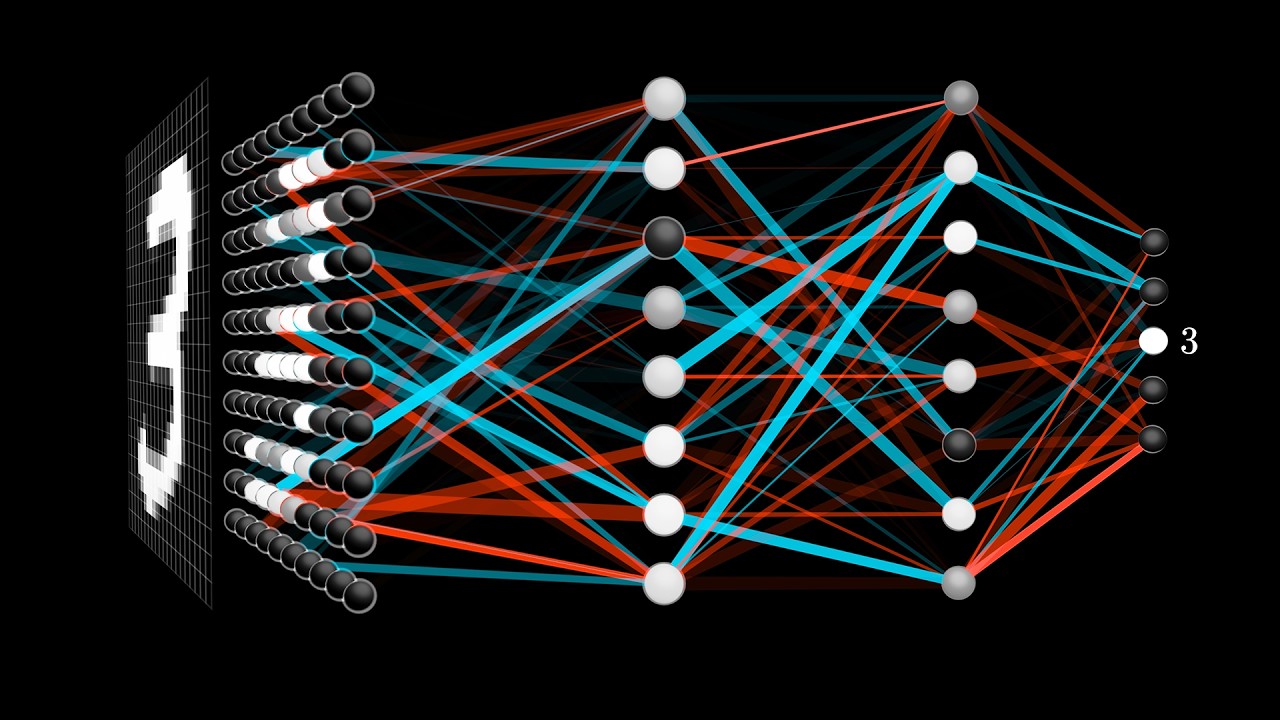
But what is a neural network? | Deep learning, chapter 1
Master artificial neurons, activations between 0 and 1, feature hierarchies, weighted sums, biases, and compact matrix algebra.
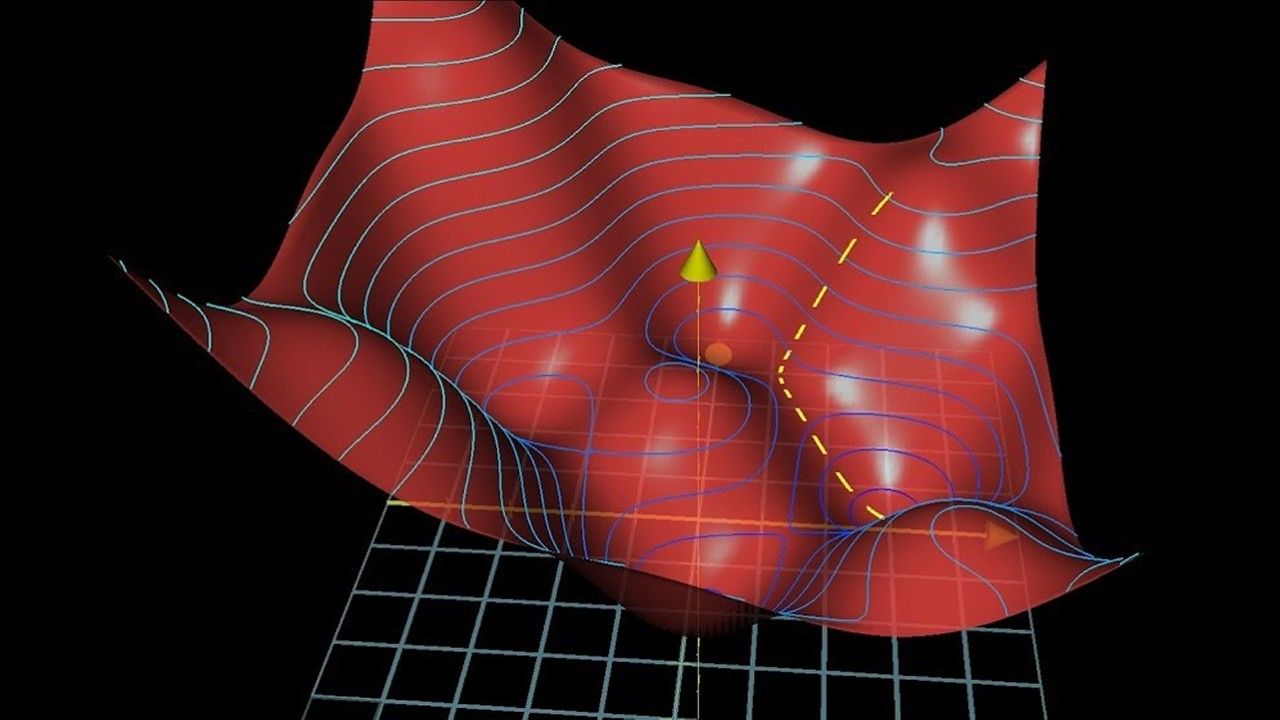
Gradient descent, how neural networks learn | Deep Learning Chapter 2
Understand the cost function, high-dimensional loss landscapes, gradient vectors, and the mechanics of gradient descent optimization.
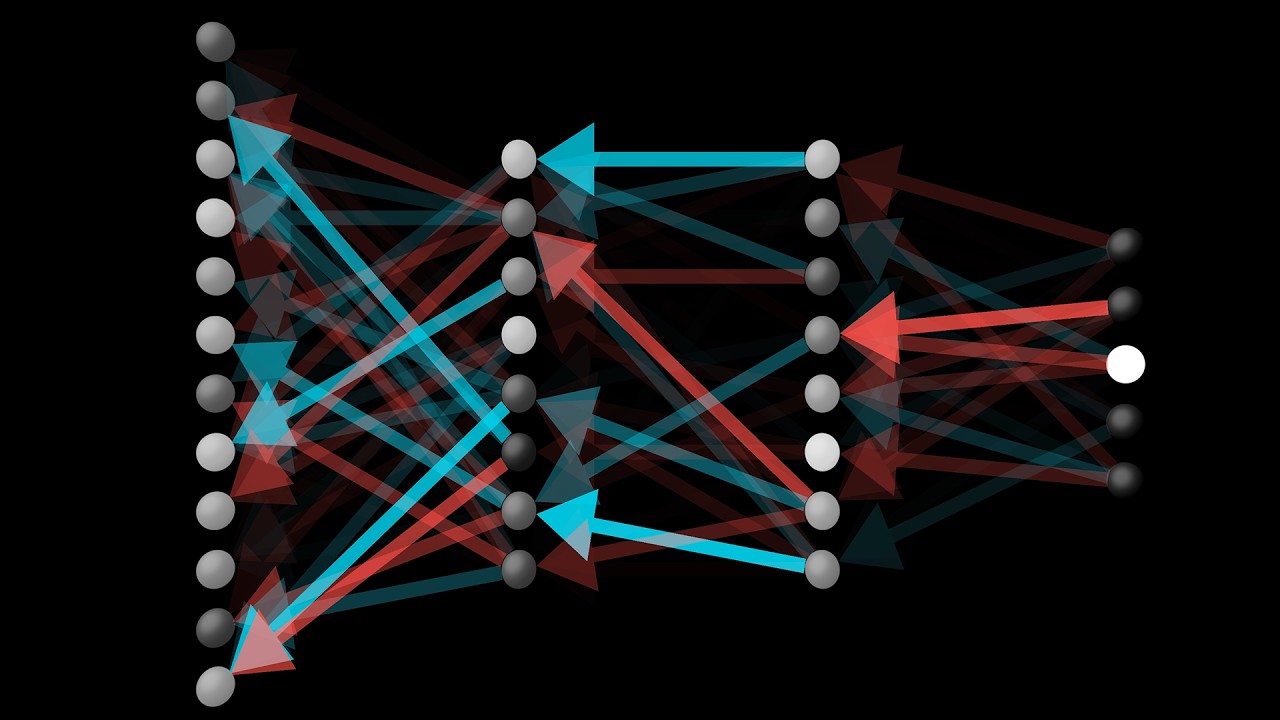
Backpropagation, intuitively | Deep Learning Chapter 3
A visual walkthrough of how backpropagation calculates desired nudges to weights and activations from output back to input.
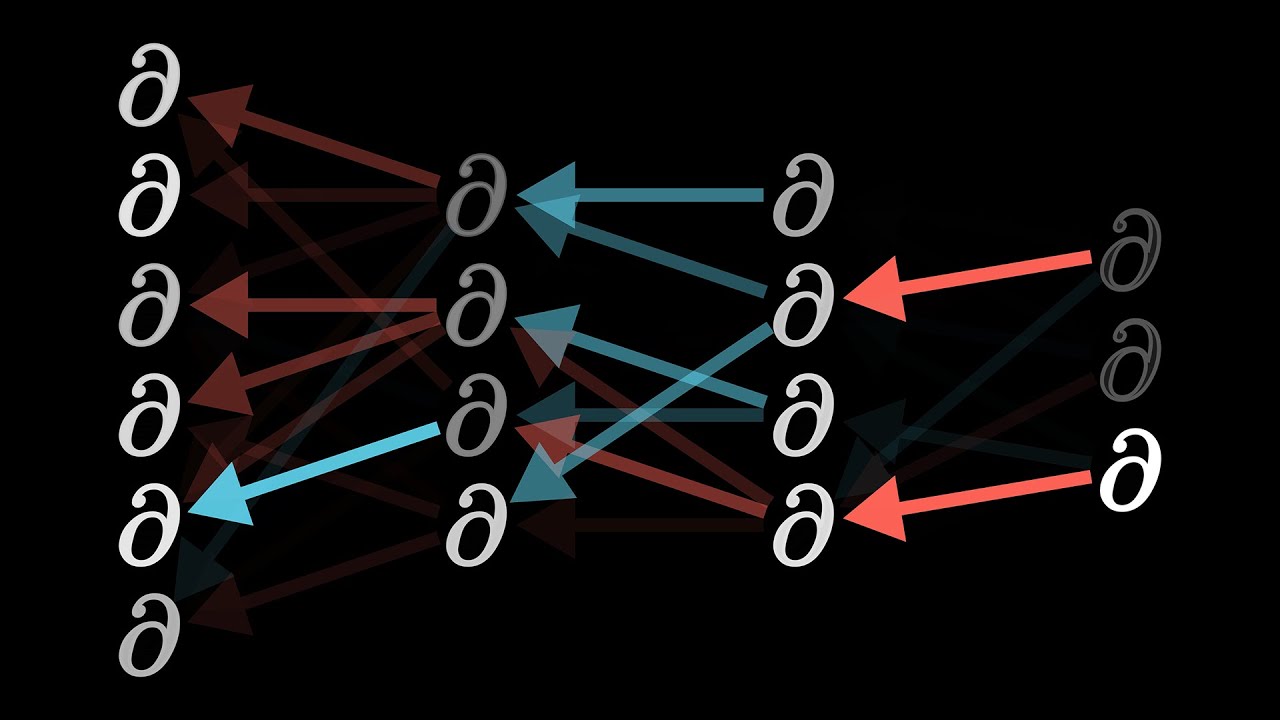
Backpropagation calculus | Deep Learning Chapter 4
The formal mathematical derivation of backpropagation using the multivariable Chain Rule, partial derivatives, and matrix products.
Large Language Models explained briefly
A fast, intuitive overview of how Large Language Models generate text by repeatedly predicting the next token in high-dimensional semantic spaces.
Transformers, the tech behind LLMs | Deep Learning Chapter 5
Explore the complete inner anatomy of the transformer: token embeddings, high-dimensional spaces, unembedding matrices, and softmax with temperature.
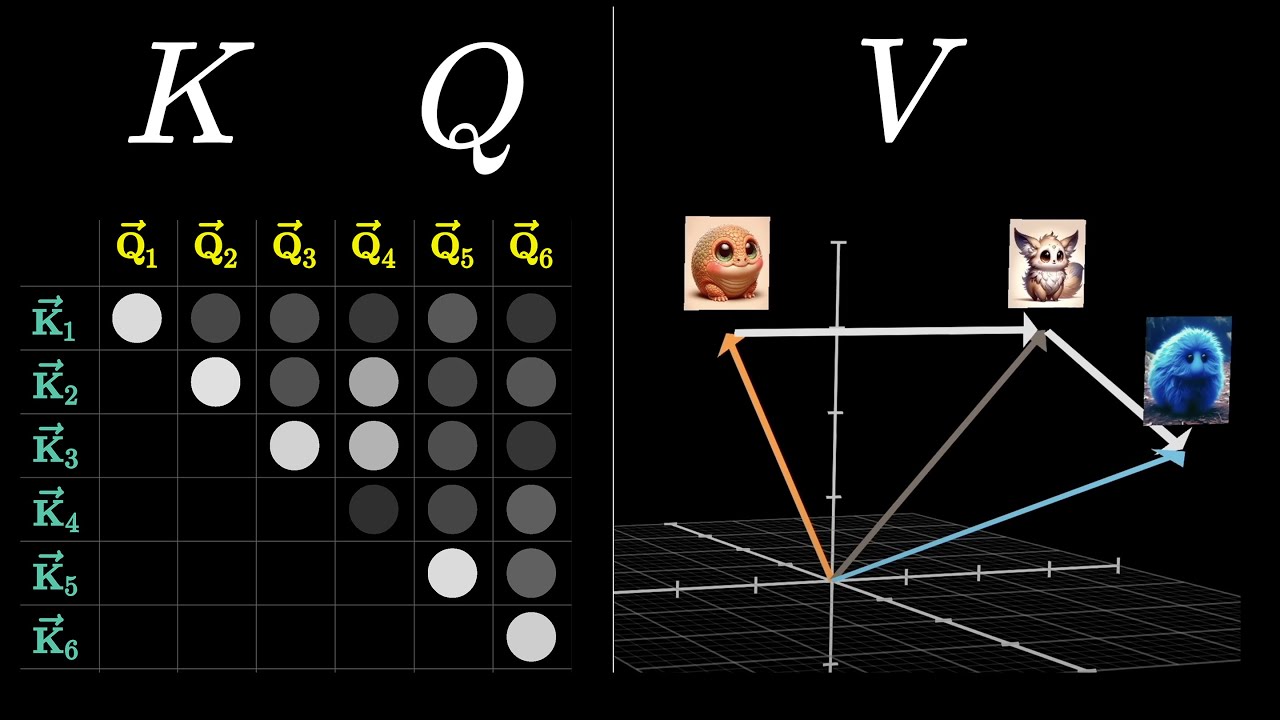
Attention in transformers, step-by-step | Deep Learning Chapter 6
The ultimate step-by-step visual breakdown of the Self-Attention mechanism: Queries, Keys, Values, Attention Matrices, Causal Masking, and Multi-Head projection.
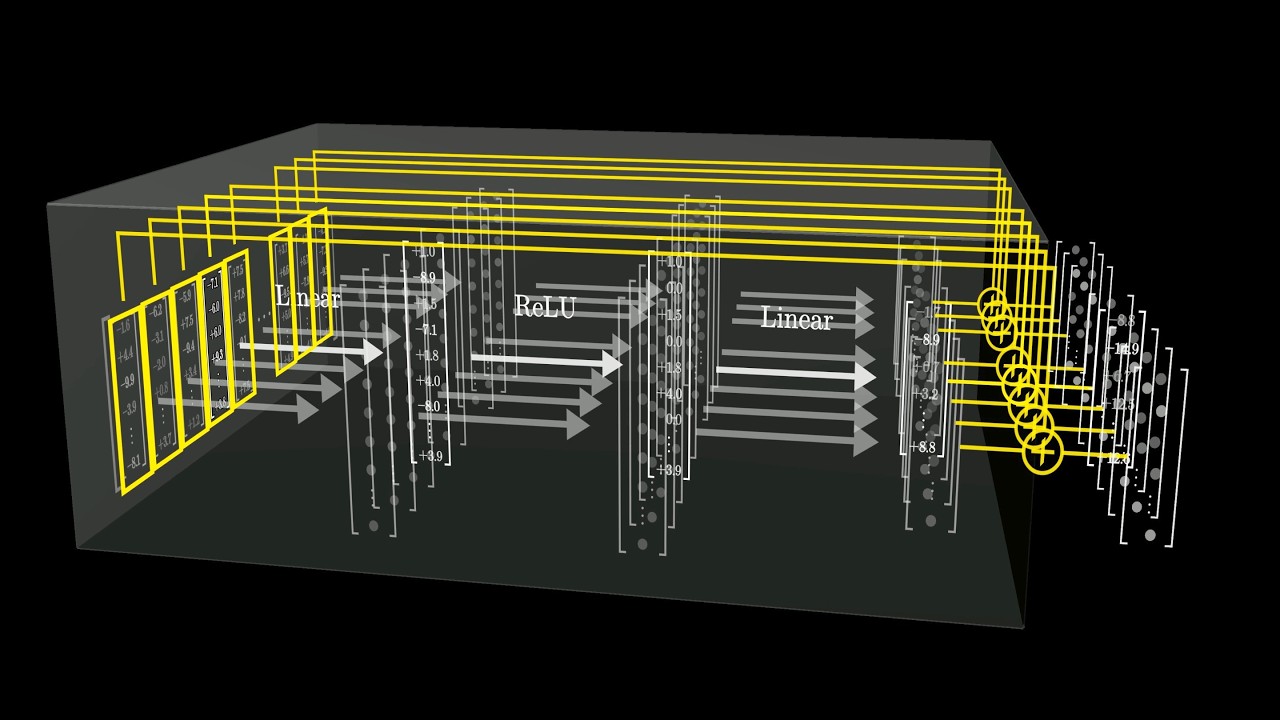
How might LLMs store facts | Deep Learning Chapter 7
Investigate mechanistic interpretability and how Multilayer Perceptrons (MLPs) act as associative key-value memory banks storing factual knowledge.
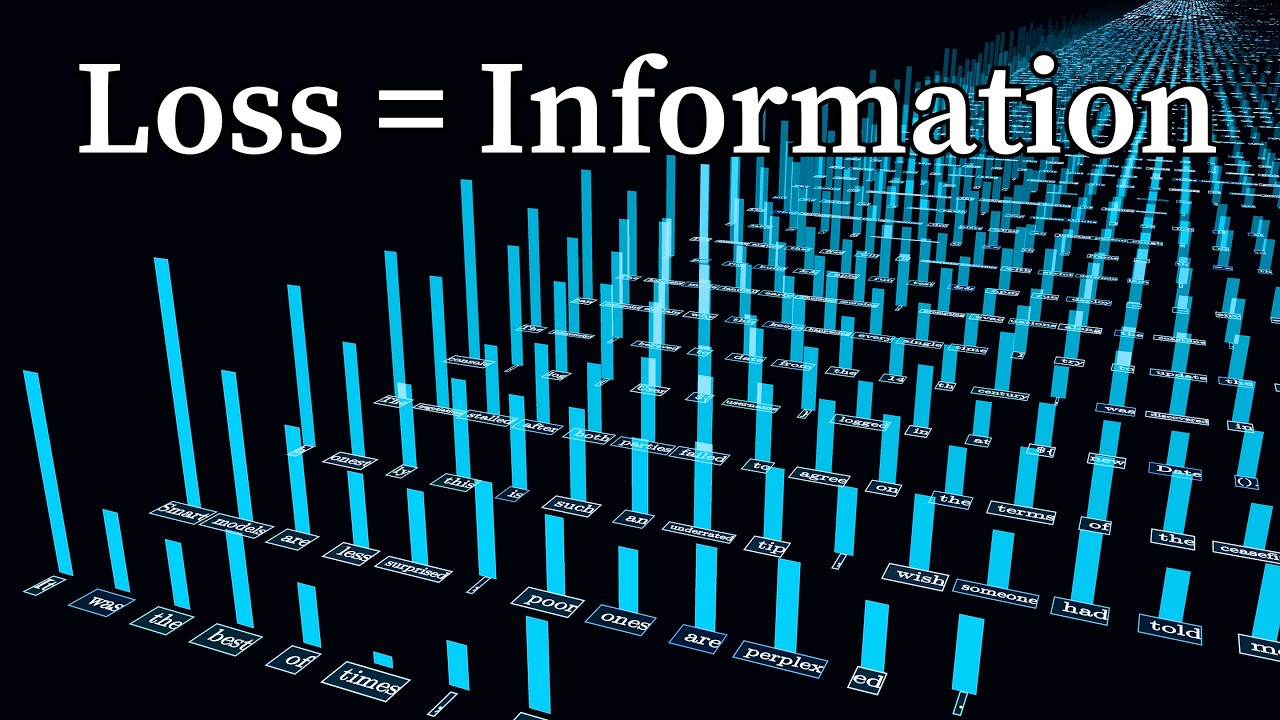
But what is cross-entropy? | Information theory, part 2
The information-theoretic foundations of Cross-Entropy loss, optimal bit compression, KL divergence, and why it is the gold standard training objective for LLMs.
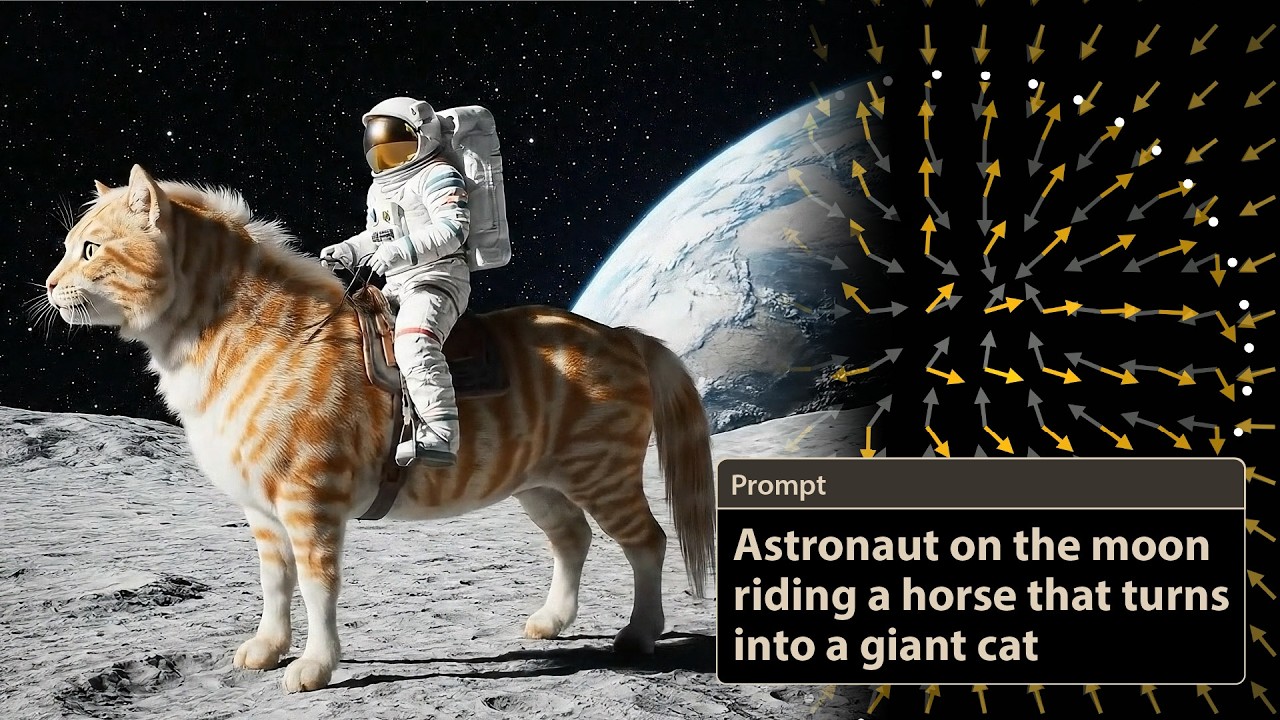
But how do AI images and videos actually work? | Guest video by Welch Labs
A visual masterpiece on Multimodal Generative AI: text-image shared embeddings with CLIP, Denoising Diffusion Probabilistic Models (DDPM), score matching, and classifier-free guidance.